Freehold, But Not Free: The Old Deeds That Still Control Your Land

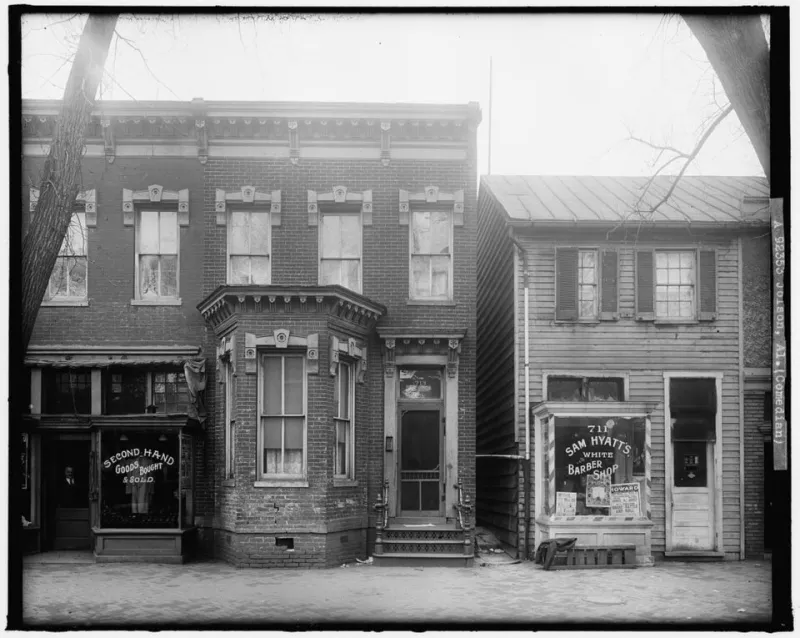
Photo: Tkonsta, CC0, via Wikimedia Commons
There is a particular kind of surprise that arrives not with a knock at the door but with a solicitor's letter years after completion. A homeowner applies for planning permission to build a modest extension, or a buyer discovers, mid-purchase, that the land they are buying carries a restriction written in 1923: no buildings other than one private dwellinghouse shall be erected thereon.
The freehold is theirs — but in a meaningful sense, it never quite was.
What a Restrictive Covenant Actually Is
A restrictive covenant is a promise attached to land. When a parcel of land is sold off — a garden plot, a field, a pair of semi-detached houses — the seller often imposes conditions to protect what remains. Common examples include:
- prohibitions on building anything other than a single dwelling;
- bans on running a business from the property;
- requirements to maintain walls, fences or shared drives;
- restrictions on keeping certain animals, or on splitting the property into flats.
The key word is restrictive. Unlike a positive covenant (an obligation to spend money, such as maintaining a private road), a restrictive covenant does not require the owner to do anything — only to refrain. That distinction matters enormously, because it is the reason restrictive covenants can bind successive owners indefinitely.
Why Old Rules Still Apply to New Owners
The law of restrictive covenants on freehold land was shaped by the House of Lords in Austerberry v Oldham Corporation (1885) and refined by Tulk v Moxhay (1848) before it. The practical effect, confirmed in statutes such as the Law of Property Act 1925, is this: the burden of a restrictive covenant runs with the land. Whoever buys the property takes it subject to the restriction, whether or not they knew about it.
The benefit, meanwhile, belongs to whoever owned the neighbouring land when the covenant was created — and often to their successors. That original developer's company may have been dissolved decades ago, but the person who bought the neighbouring field from them may well be able to enforce the covenant today.
How Covenants Come to Light
Most covenants surface during conveyancing. Your solicitor examines the title register at HM Land Registry and the filed title deeds, looking for entries in the Charges section. Covenants imposed in a transfer will usually appear there, often in the form of a reference to an older deed.
A competent conveyancer will not merely note that a covenant exists — they will read it and advise what it means in plain English. Is it genuinely restrictive, or is it a positive obligation in disguise? Who might have the benefit? Has it arguably become obsolete or unenforceable?
Buyers sometimes assume that because a previous owner breached a covenant without consequence — the bungalow street full of loft conversions, the cul-de-sac where everyone runs a business — the rule is dead. It is not. Each breach creates a fresh potential claim, and the absence of past enforcement proves nothing.
When a Covenant Can Be Ignored, Varied or Removed
There are several routes out from under an unwanted covenant:
Obsolescence. If the character of the neighbourhood has changed so fundamentally that the covenant serves no useful purpose, it may be unenforceable in practice. Courts are reluctant to help enforce covenants that have lost all point.
Consent. If the person entitled to the benefit can be identified, they may agree to release it — usually for a fee. Locating them can be a detective exercise involving the deeds, company records at Companies House, or even genealogy.
The Upper Tribunal (Lands Chamber). Section 84 of the Law of Property Act 1925 allows the Tribunal to discharge or modify restrictive covenants in defined circumstances — for example, where the covenant is obsolete, obstructs reasonable use of the land, or where everyone with the benefit consents. Applications are technical and evidence-heavy, but they succeed often enough to be a genuine remedy.
Indemnity insurance. Where the risk is historical and the breach has already occurred — say, the house was built in breach of a covenant decades ago — insurers will often cover the risk of enforcement for a one-off premium.
A Word of Caution About Indemnity Insurance
Indemnity insurance is a useful tool, but it is frequently treated as a rubber stamp when it should be a considered decision. Three points deserve attention before you sign:
- Insurance does not cure the breach. It compensates you if the covenant is enforced; it does not make your building lawful. If you intend to sell or mortgage, some buyers and lenders will not accept insurance as a substitute for a proper release.
- Disclosure kills cover. Once you raise the matter with the covenant holder — even by asking their permission — the risk becomes known, and known risks are uninsurable. Ask your solicitor before anyone makes an approach.
- The policy follows the land, not always the plan. Check whether the cover extends to your intended works or only to the existing situation.
Practical Advice for Buyers and Self-Builders
If you are purchasing land — particularly a plot for self-build, where covenants are common — raise the point early. Ask your conveyancer to:
- obtain the full title deeds, not just the register;
- report on each covenant and its likely enforceability;
- identify who holds the benefit and whether they can be traced;
- quote for a s.84 application or insurance where appropriate, so you can price the risk before exchange.
For self-builders especially, the arithmetic matters. Discovering after purchase that your dream design breaches a covenant — and that remedying it requires a Tribunal application costing thousands — is a far worse position than negotiating a price reduction or a release before you commit.
The Bottom Line
A freehold title is a bundle of rights, and covenants are the strings still attached. They are usually manageable, often benign, and occasionally expensive — but never something to discover by accident. If your conveyancer raises a covenant, treat it as information worth having, not paperwork to skim past.
At Alan Curtis Legal, we review restrictive covenants as a routine part of every conveyance and advise clients plainly on what each one means for their plans. If you are buying a plot, extending a home, or wondering whether that old restriction still has teeth, we are happy to take a look before you commit.